
By Canada Voice AI-Assisted News Writer | October 17, 2026
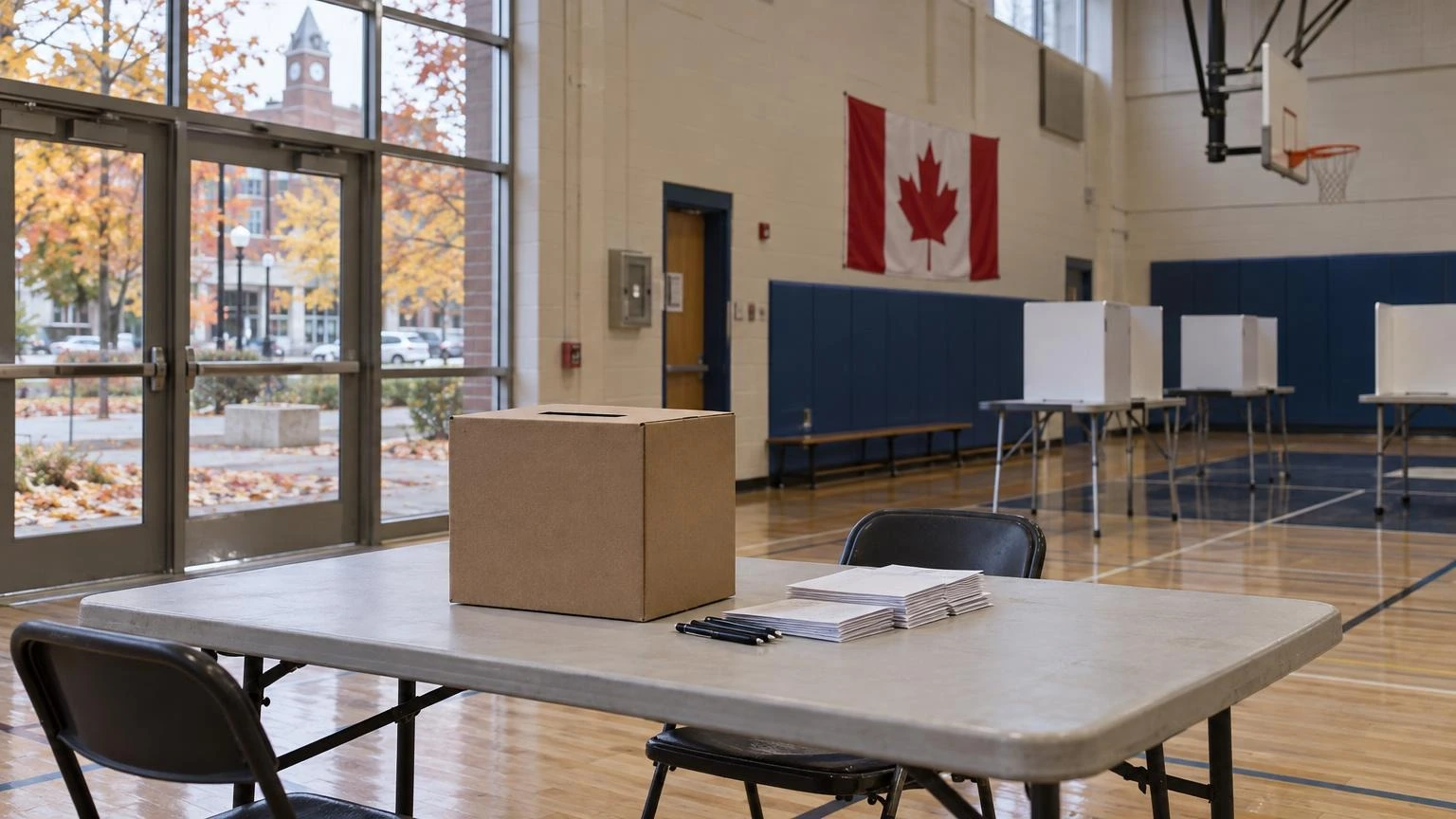
With Toronto’s October 26 municipal election approaching, coverage of the mayoral contest between incumbent Olivia Chow and challenger Brad Bradford raises a broader question about political journalism: how much do the media influence the way voters understand a campaign?
The question is not whether news organizations are secretly working with candidates. This analysis presents no evidence of coordination between a newsroom and either campaign.
The issue is more subtle. Journalists decide which developments deserve attention, which numbers belong in headlines and which aspects of a story should lead. Those decisions can influence how readers perceive a candidate’s momentum, the competitiveness of a race and the issues that matter most.
A report can be factually accurate while presenting only one part of a more complicated picture. That makes political news framing worth examining, especially in the final days before an election.
Polls tell a story, but not the whole story
Polling often dominates election coverage because it offers a numerical snapshot of voter intentions. A narrowing lead can suggest a more competitive contest, while a candidate maintaining a substantial advantage may indicate a more difficult path for the challenger.
But interpreting those developments requires care.
Polls are snapshots rather than predictions. Results can vary because of sampling, weighting, field dates and differences in how pollsters classify decided, leaning and undecided voters. Small changes between surveys do not necessarily demonstrate a genuine shift in public opinion.
For that reason, reporting that describes a race as tightening should explain the evidence supporting that conclusion. Ideally, it should distinguish changes within a consistent polling series from differences between pollsters.
Likewise, reporting that emphasizes a candidate’s continuing lead should provide enough context for readers to understand whether the contest is competitive and how uncertain the result remains.
Without the original polling releases and consistent comparisons, it would be premature to conclude that any particular poll proves sustained momentum in the Chow–Bradford race.
How headlines shape perceptions
Consider two possible headlines describing the same poll.
One emphasizes that the challenger is closing the gap. The other emphasizes that the incumbent remains ahead.
Both descriptions could be accurate. Yet they direct the reader’s attention toward different conclusions: one toward movement, the other toward the existing advantage.
This is the central challenge of political framing. Readers frequently encounter a headline before deciding whether to read the full article. The first impression can therefore influence which facts they consider most important.
However, different headlines do not automatically establish bias. An editor may reasonably choose to highlight a narrowing margin if that is the most significant development. Another editor may reasonably emphasize the candidate who remains in front.
The appropriate test is whether the headline fairly reflects the underlying evidence and whether the article supplies the context necessary to interpret it.
A stronger investigation would compare the actual headlines and full reports published by CBC, NOW Toronto and TorontoToday about the same polling releases. It would establish what each outlet emphasized, what context it included, and whether it applied similar standards consistently.
Until those original reports have been examined together, claims about a systematic difference in their treatment of the candidates should remain provisional.
Story selection matters, too
Election coverage can focus on polling, endorsements and campaign strategy. It can also focus on housing, homelessness, public safety, transit, affordability and the practical consequences of policy proposals.
All these subjects are legitimate parts of an election. The concern arises when the running narrative about who is winning receives more attention than the choices voters must evaluate.
Polls can tell readers something about voter intentions. They cannot establish whether a housing proposal is financially realistic, whether a transit commitment can be delivered or whether a candidate’s record supports a campaign promise.
That is why policy reporting and scrutiny of candidates’ claims remain essential, even when a race is generating intense interest.
A systematic review of election coverage could assess how frequently outlets examine policy substance, how prominently those stories appear and whether candidates receive comparable scrutiny on similar issues.
Such a review would provide a firmer basis for evaluating coverage than impressions drawn from a few individual headlines.
News and opinion serve different purposes
Political commentary also needs to be distinguished from straight-news reporting.
Opinion columnists are entitled to argue that a candidate’s policies, political alliances or endorsements should concern voters. Readers should evaluate those arguments on their merits, including the evidence and reasoning supporting them.
News reporting has a different responsibility: to present relevant facts, provide context, test claims and represent competing positions fairly.
The presence of an openly critical opinion column does not establish that a publication’s news coverage is biased. Nor does the absence of an equivalent column supporting another candidate demonstrate that one side receives more favourable treatment overall.
Evaluating the balance of political commentary would require a separate review of opinion pages across outlets, including the arguments made, their prominence and the range of perspectives published.
What would demonstrate media bias?
A credible assessment must distinguish editorial framing from systematic bias.
The first can be observed by comparing headlines and story emphasis. The second requires broader evidence showing a recurring pattern of unequal treatment.
A proper analysis of Toronto’s mayoral coverage would examine a defined period and include:
Original headlines and complete articles from multiple news organizations.
The polling releases and other primary sources underlying each report.
Differences between news, analysis, editorials and opinion columns.
The prominence given to candidates’ policies, records, claims and responses.
Whether comparable events involving different candidates receive comparable scrutiny.
Whether headlines accurately reflect the findings presented in the full article.
The review should include examples that challenge the initial hypothesis as well as those that support it. Otherwise, the analysis risks selecting only the evidence that fits a predetermined conclusion.
Even if such a study identified a recurring pattern, demonstrating that the coverage changed voting behaviour would require additional evidence.
That distinction is fundamental: a plausible mechanism of influence is not proof of a measurable electoral effect.
What voters can do
With election day approaching, readers can take practical steps to assess political reporting.
Read beyond the headline. Determine whether the article supports the impression created by its opening lines.
Check original sources. For polling stories, examine the field dates, sample sizes, margins of error and categories of voters included in the results.
Compare independent reports. Different accounts of the same event can reveal which facts each newsroom considers most important.
Separate reporting from commentary. Opinion columns make arguments; news reports should substantiate their claims and provide appropriate context.
Examine the candidates themselves. Platforms, records and specific policy commitments offer information that cannot be replaced by polling narratives.
These habits help readers question the framing of a story without assuming that every editorial decision reflects a political agenda.
Conclusion: Question the framing, demand the evidence
Toronto’s mayoral race offers a useful opportunity to examine how political news shapes public understanding. Headlines, story selection and editorial emphasis can influence which aspects of a campaign receive attention and how readers interpret developments.
But identifying that possibility is only the beginning of a serious analysis.
Establishing whether particular outlets consistently favour one candidate requires verified examples, original sources and a systematic comparison of coverage. Demonstrating an effect on voters requires further evidence still.
The appropriate response is neither to assume that the media are neutral in every editorial choice nor to presume that differences in emphasis prove political bias.
News organizations should provide accurate reporting, sufficient context and headlines that fairly represent the evidence. Readers should examine the underlying facts and remain alert to the difference between a documented development and an interpretation of what it means.
In the final days before October 26, the most important question is not simply which candidate appears to have momentum. It is whether voters have the reliable information they need to make an informed decision.
Editorial note: This article was prepared with AI assistance. The specific polling figures, original headlines and individual article attributions in earlier drafts have not been independently verified for this version and have therefore been omitted. The article makes no allegation of political coordination or improper conduct by any journalist or news organization.